Quick summary: To get survey responses, start by defining exactly who should answer, then share the survey where those people already spend time — email lists, post-purchase touchpoints, targeted research panels, online communities, paid ads, or partner audiences. The goal isn’t the biggest possible pile of answers. It’s enough thoughtful responses from the right target audience to support the decision you’re making.
PickFu, the consumer research platform behind this guide, is one fast way to do that: build a survey, launch it to a built-in panel of verified human respondents, and get qualitative answers back within hours. We’ll use real PickFu tests as examples throughout.
A survey only becomes useful when people answer it. That sounds obvious, but it’s where a lot of research projects fall apart.
A founder writes a thoughtful questionnaire, shares the survey link on a personal LinkedIn account, and waits. A marketer drops a feedback form into a newsletter and gets a handful of answers. A product team collects hundreds of responses, then realizes most respondents look nothing like the customers they were trying to understand.
In each case, the problem looks like a shortage of survey responses. The deeper problem is research design. Getting responses isn’t just about distribution. You need to know whose feedback matters, what would make those people participate, when in the customer journey they’re likely to answer, and how you’ll tell good responses from bad.
A small group of well-qualified respondents often beats a big sample of people with no stake in the decision. Thirty Amazon Prime members who shop a category regularly can steer a listing better than 300 random social media users. Twenty former trial users can reveal more about onboarding friction than a huge panel of people who’ve never seen the product.
So the best way to get survey responses depends on what you want to learn. Customer satisfaction research should reach actual customers. Prototype market validation should reach potential users. Package design testing should reach the people who buy that category. This guide covers how to recruit survey participants, improve survey response rates, choose channels, evaluate paid panels, and protect the quality of your survey data.
A quick example: package design testing with real shoppers
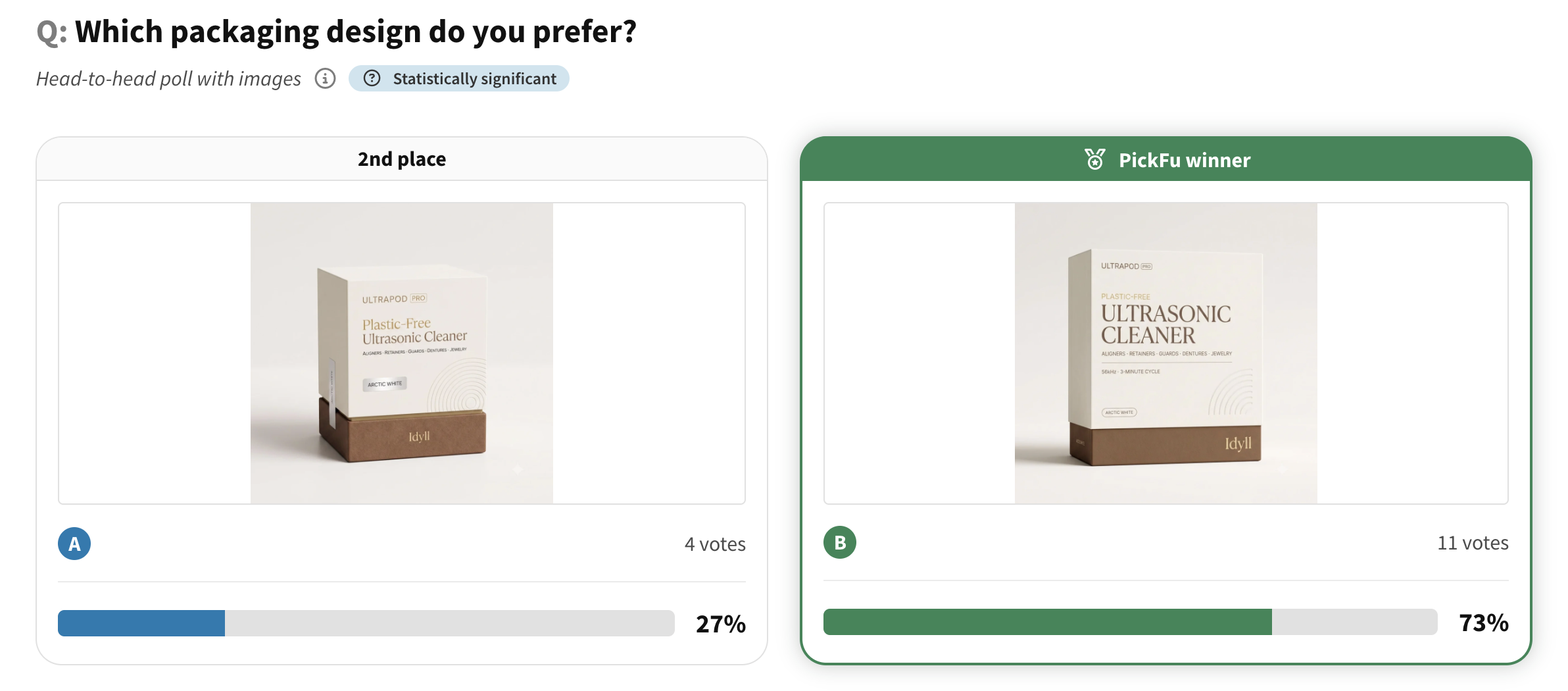
Here’s what this looks like in practice. A Reddit user in r/PackagingDesign wanted feedback on two versions of a product package, so we ran it as a head-to-head test in PickFu to see which one shoppers preferred and why.
To use PickFu, you just upload your options, pick the audience you want to hear from, and get written feedback from verified human respondents who match it. For this test, that was 15 people in the US, with answers back the same day.
📊 Survey example: Which packaging design do you prefer? (15 US respondents)
What the results showed:
- Option B won 11 votes to 4 (73% to 27%). The recurring reasons: a clearer information hierarchy, stronger readability, and a more polished look.
- One respondent put it this way: “The larger, bolder ‘Ultrasonic Cleaner’ text makes the product purpose clear. The layout feels more premium and modern.”
- Fans of Option A liked its texture and font, but several said extra stickers and smaller title text made it feel less cohesive.
The takeaway wasn’t just “pick B.” It pointed to the next test: keep B’s hierarchy but borrow A’s more premium styling, then compare the two. A first survey rarely gives you the final answer. It tells you what to change and who should weigh in next.
Before you start, get clear on the goal
Different surveys do different jobs. You might be measuring customer satisfaction, validating a new product idea, comparing design or packaging options, testing ad copy, or getting to know an audience you want to sell to. Each goal points to a different group of respondents and a different way to read the results.
Two things are worth deciding before you build anything.
First, define who should answer, in plain terms. “US consumers” is too broad. “US dog owners who bought dog shampoo in the past six months” is something you can actually recruit and screen for. That definition shapes your survey questions, your cost, your sample size, and how much the results can tell you.
Second, be honest about whether you’re measuring opinions or behavior. Asking people whether they like an idea isn’t the same as watching them buy it. Surveys are strongest when you know what the answers can and can’t prove.
The best ways to get survey responses
No single method wins for every survey. The most reliable approach is to match the channel to the audience and to the stage of the customer journey.
1. Send the survey to your existing email list
An existing email list is often the most direct place to start. The recipients already know you — current customers, newsletter subscribers, leads, trial users, event attendees, students, employees, or former customers.
The upside is relevance: they recognize the sender and may get why their feedback matters. The catch is selection bias. Your list reflects the people you’ve already reached, not the whole market.
A good survey invitation makes the trade clear. Say why you’re asking, how long it takes, and what you’ll do with the answers. Use one obvious call to action, not a survey link buried among competing messages.
A vague subject line like “Please complete our survey” feels like a chore. A specific one — “Help us improve the trial setup experience” — ties the effort to a real outcome.
We tested exactly that on PickFu, putting a generic invitation (“Please complete our survey”) head-to-head against a specific, value-driven one (“Help us fix what’s slow about checkout”) to see which one US shoppers would rather open.
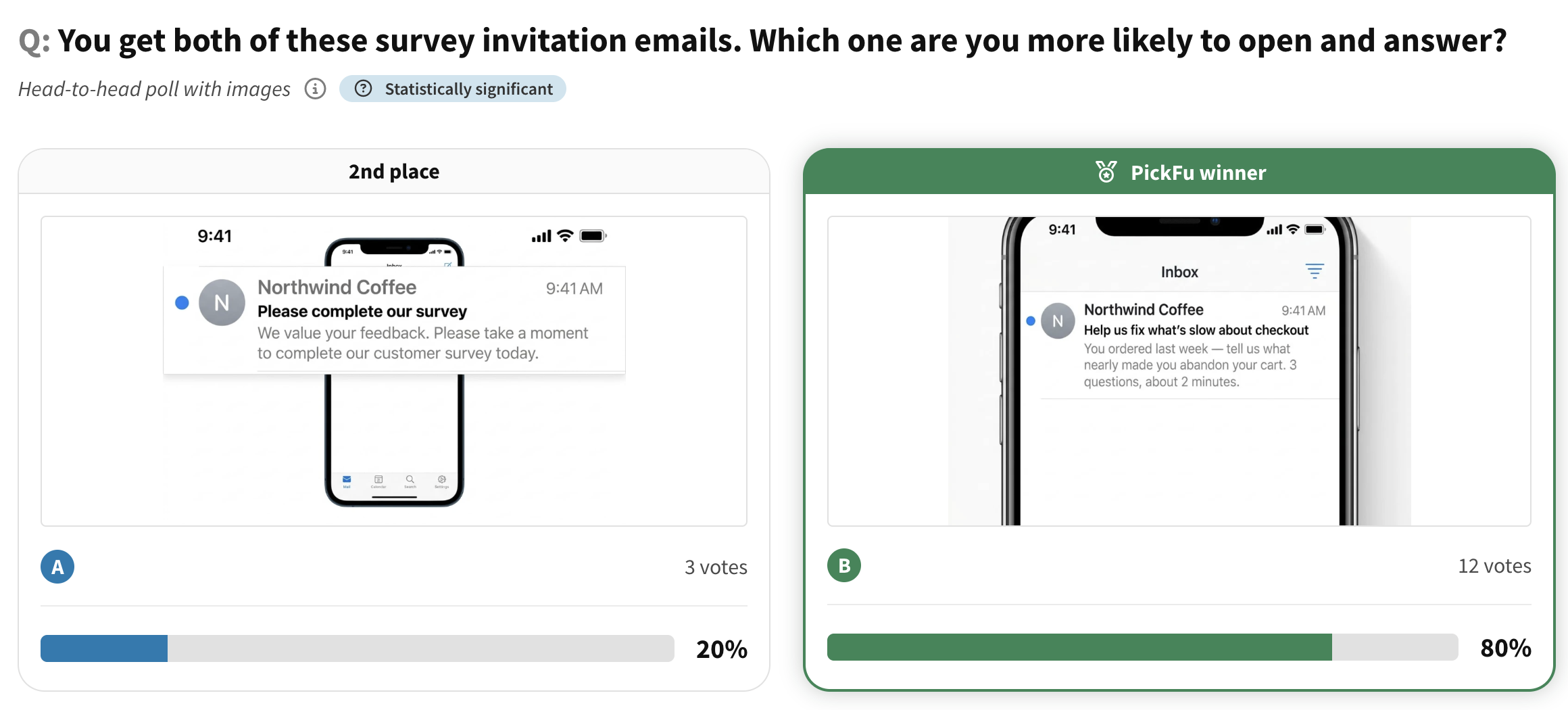
📊 Survey example: Which survey invitation gets opened? (live and collecting responses)
One reminder can lift responses a lot, because people mean to answer and then forget. Daily reminders do the opposite: they burn trust and drive unsubscribes. And personalization helps — a note tied to someone’s recent interaction reads as more credible than a generic blast.
2. Ask for feedback after meaningful customer interactions
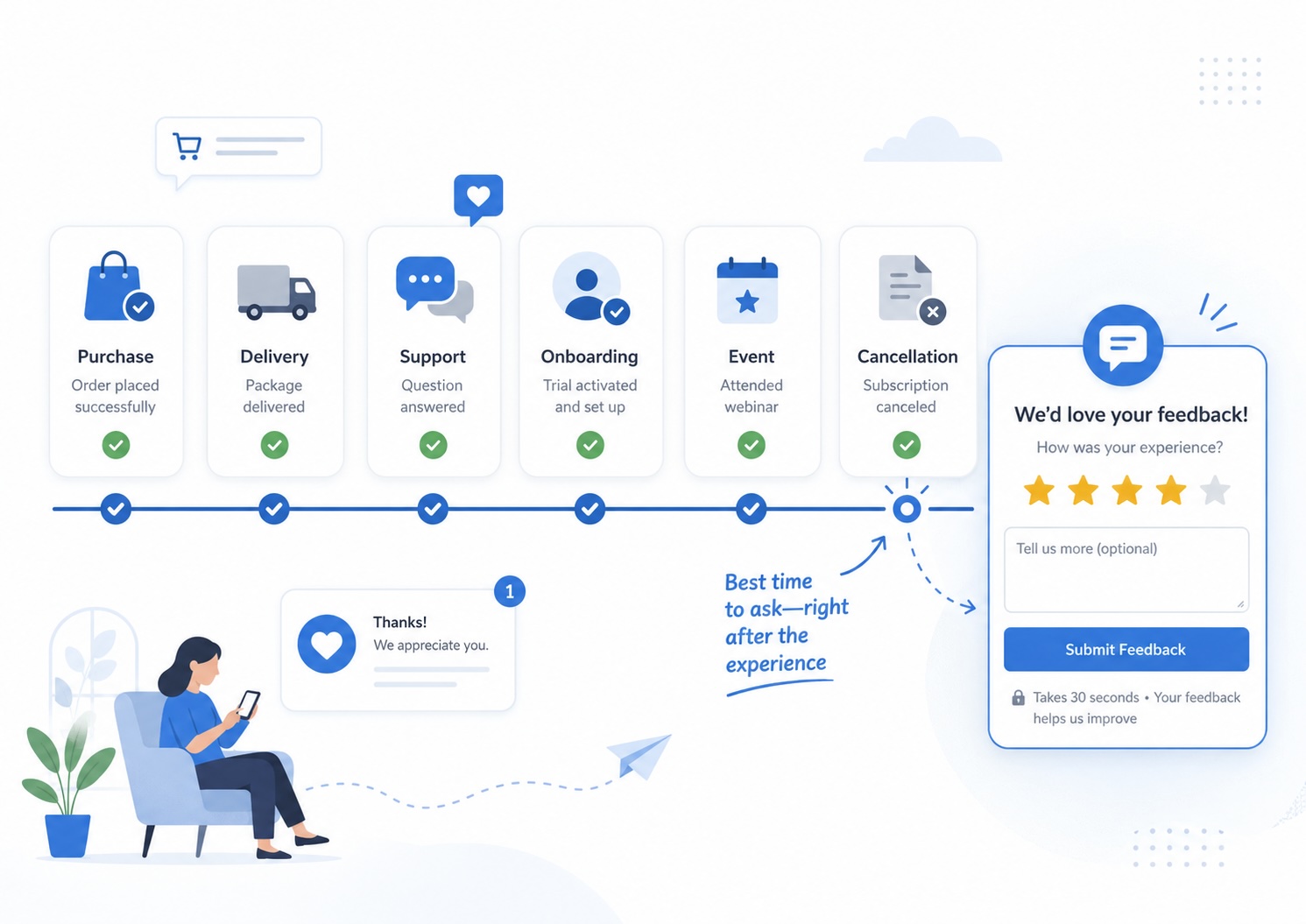
The best time to ask is usually right after the experience you’re asking about — a purchase, delivery, support case, onboarding, trial, event, or cancellation.
This works because the experience is fresh. The customer doesn’t have to dig through memory, and the request feels natural. A support survey should land soon after the case closes; wait a month and unrelated experiences creep in. An onboarding survey shouldn’t show up before the user has finished setting up.
Timing has to fit the journey. Asking for a net promoter score right after signup measures first impressions, not loyalty. Asking someone to rate a product before it arrives just produces noise.
A home-goods retailer is a good example. It first sent a product survey the day an order shipped. Volume was fine, but the open-ended answers were full of delivery complaints instead of product feedback. The team moved the survey to seven days after delivery. Immediate responses dipped, but the answers got sharper — because customers had actually used the product. The questionnaire didn’t change. The timing did.
3. Use a targeted survey panel
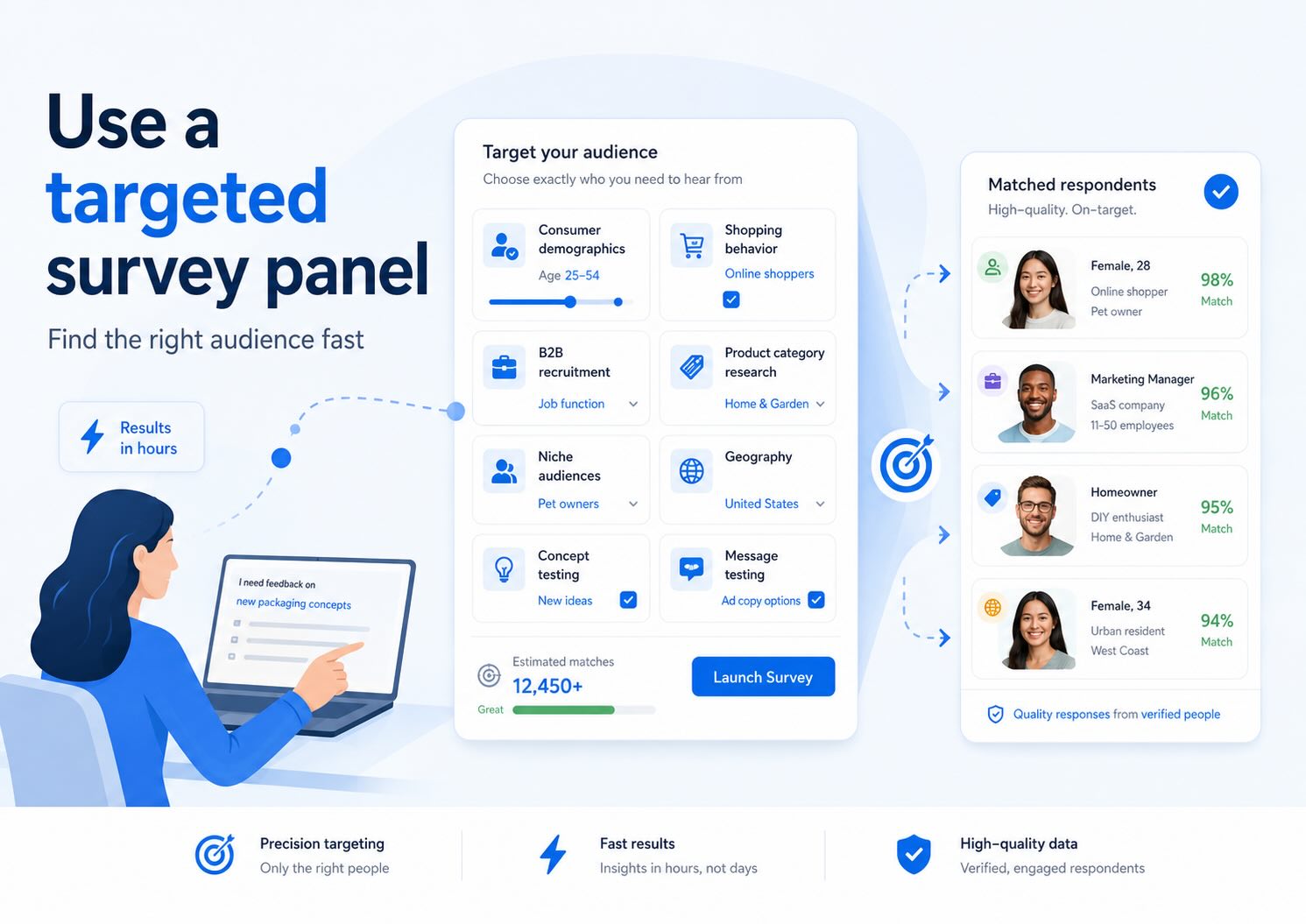
A survey panel is often the fastest way to recruit people when you don’t already have access to your target audience. Panels can handle consumer and demographic targeting, shopping behavior, B2B recruitment, product-category research, niche audiences, geography, and concept or message testing.
A platform like PickFu brings respondents to you instead of making you distribute the survey yourself. PickFu offers polls from 15 to 500 respondents, with pricing that starts at $1 per response, or $15 per poll. You can test text, images, video, and full concepts with a random or targeted audience — a fast form of prototype market validation.
Teams lean on panels like this as a lighter alternative to focus groups: comparing packaging and logo designs, weighing app icons and store screenshots, checking product images and ad creative, and pressure-testing names, slogans, and taglines before they commit.
Quality is what separates a useful panel from a costly one. PickFu holds a high bar: every panelist is verified as a real person, not a bot, and responses run through ongoing quality checks. In fact, PickFu rejects more than half of the people who try to take its surveys because they don’t meet that bar.
Before you commit to any panel, check how participants are recruited, whether you can target them, how identities are verified, whether respondents are paid fairly, how duplicates and fraud are caught, whether low-quality responses get replaced, how fast results arrive, and how your data is handled. Cheap responses get expensive when they send you the wrong way.
4. Post in relevant online communities

Reddit, LinkedIn groups, Facebook groups, Discord servers, Slack communities, professional associations, and industry forums can give you free access to survey respondents. This works best when you’re already a credible member.
Spinning up a new Reddit account, dropping a survey link into a subreddit, and vanishing rarely works — and it breaks the rules of many communities. Contribute first. Answer questions, join discussions, and learn how the group talks about the topic. When you do post, say who should answer, why you’re running the research, and whether you’ll share the findings.
People often ask, where can I post a survey without getting flagged as spam? Communities that have historically allowed survey recruitment include r/SampleSize, r/SurveyExchange, and r/takemysurvey. Rules change, so read each one’s current requirements first.
Free distribution comes with uncertain reach. Early testing found Reddit and LinkedIn survey posts often drew little visible engagement — some people answer without commenting, but many posts got only one or two public replies. That doesn’t make communities useless. It means results hinge on your account history, audience fit, headline, timing, and community trust.
The best community posts don’t pretend the request is for everyone. “I’m researching how US Amazon sellers choose their main listing image. Three-minute survey, for people who currently sell physical products on Amazon. I’ll share a summary with the group.” That beats “Please take my survey.”
5. Recruit respondents through paid advertising
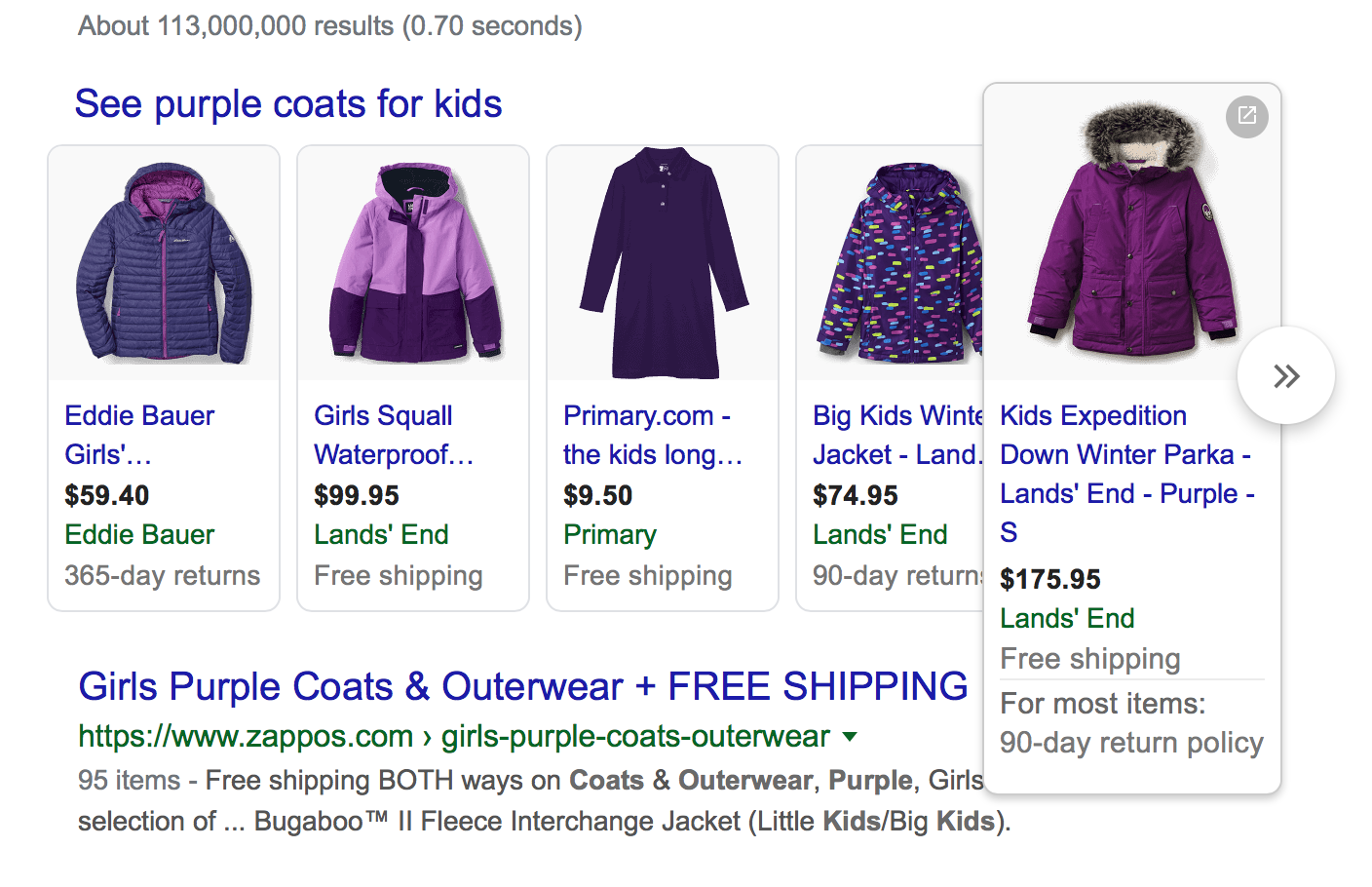
Paid ads can reach people beyond your existing audience, especially when your targeting is clear. Options include Google Ads, Meta Ads, LinkedIn Ads, Reddit Ads, TikTok Ads, industry newsletters, creator sponsorships, and niche publications.
This works well when the survey topic is appealing on its own. A study about remote work, new consumer tech, or industry pay can earn attention because the subject is relevant. It gets inefficient when the audience is fuzzy — broad traffic brings clicks and few qualified completions, and every extra question raises your cost per response.
A B2B survey shows the trade-off. A software company promoted a questionnaire to a broad LinkedIn audience by job title. It drove traffic, but many people worked adjacent to the target role and failed the screener. The team narrowed the targeting, spelled out the qualification in the ad, and moved eligibility questions to the front. Cost per click went up; cost per qualified response went down.
Paid ads also need fraud controls. Incentivized traffic can attract people who fudge their answers to qualify, so screening questions shouldn’t reveal the “right” answer, and responses should be checked for consistency.
6. Offer an incentive
People are giving you their time, and an incentive respects that. Common ones include gift cards, cash, discounts, product credits, free resources, early access, charitable donations, prize draws or raffles, and a summary of the findings.
Match the reward to the effort and the audience. A five-minute consumer survey needs only a small thank-you. A 45-minute interview with a senior leader needs real money. Offer too little and it feels disrespectful; offer too much and you attract people who care more about qualifying than answering honestly.
Incentives shape how you read the data, too. Someone who answers for a reward isn’t automatically a bad respondent — research panels pay people all the time. What matters is whether your screening and quality checks discourage dishonesty. Make the rules clear: who qualifies, when and how the reward arrives, and whether partial or duplicate entries count. Collecting contact information separately from answers helps protect privacy.
7. Embed surveys in your website or app
A website or app can collect feedback right where the experience happens. Common spots include a post-purchase page, an account dashboard, a cancellation flow, a support center, a feature page, an exit-intent pop up, a feedback widget, or a thank-you page. These are useful for customer satisfaction, usability, feature feedback, and customer experience research.
A pop up that interrupts a first-time visitor before the page loads breeds frustration, not insight — they haven’t seen anything yet. A prompt after someone finishes a task is far more relevant. Keep it short. One focused question often beats a 20-question form crammed into checkout.
A SaaS company might ask users who abandon an import: “What stopped you from finishing the import today?” Preset options catch the common problems, and an optional text field lets people describe the unexpected. That ties the survey to a real behavior and closes the loop between user experience and product work.
8. Ask partners, associations, or creators to share the survey
A partner may already have trusted access to the audience you need — trade associations, professional communities, university departments, industry newsletters, creators, podcasts, or conference organizers.
The partner needs a reason to help. Sharing the findings, co-branding the research, offering early access, or producing a useful industry report can make it worth their while. Imagine a company researching how independent retailers manage seasonal inventory. Its own list is too small to segment, so a retail association shares the survey in exchange for an anonymized report for its members. The association improves the sample; the research gives the association something to share. A one-sided ask breaks this — a partner won’t promote a survey that offers its audience nothing.
9. Use QR codes for offline data collection
QR codes connect physical touchpoints to an online survey. They can go on event signage, conference badges, product packaging, receipts, table cards, retail displays, flyers, class materials, menus, and product inserts.
The message around the code should say what the person gets or improves by scanning. “Take our survey” is weak. “Tell us which session topics you want next year” has a point. Placement shapes who answers, too: a code near an event exit reaches people who stayed to the end, and one on packaging reaches customers after purchase. Those may be exactly the right respondents — just read the sample in that light.
10. Add the survey to recurring customer touchpoints
A survey doesn’t always need its own campaign. The link can live in email signatures, order confirmations, invoices, support emails, shipping notifications, renewal messages, product inserts, account pages, and newsletter footers. That turns it into an ongoing channel instead of a one-time burst. Automation can trigger invitations based on behavior, and notifications can flag responses that need follow-up.
The risk is invisibility. A link buried in a footer may pick up the odd response without ever building a dependable sample. Recurring placement is best for ongoing listening, not for a study that needs a set number of responses by a deadline.
How to get free survey responses
Free recruitment is possible, but “free” usually means trading money for time, reach, or control over the sample. The realistic no-cost options are existing email lists, organic social media, customer communities, relevant subreddits, professional and student groups, alumni networks, internal employees or beta users, website prompts, QR codes at your own events, and survey exchanges.
A free tool like Google Forms can host the questionnaire. SurveyMonkey and Qualtrics also offer survey software and templates, though plan limits vary.
Survey exchanges are another route. SurveySwap uses a reciprocal model: you answer other people’s surveys to earn credits for your own. Its site says it reaches participants in more than 20 countries, with strong representation in the US, UK, Germany, France, and a handful of others. In an early hands-on test, setup was easy, but the link between credits, survey length, and requested responses was less clear — a simple five-response survey drew only three answers in the first 24 hours. So exchanges suit researchers with more time than money, a modest sample, and patience. SurveyCircle uses a similar model and leans academic.
Free respondents aren’t automatically useful respondents. A general exchange audience may be fine for testing basic wording, but wrong for enterprise procurement, specialized healthcare tools, or US category-specific buying behavior.
How to get high-quality survey responses
Response quality starts before recruitment. A great distribution plan can’t fix an unclear audience or a biased questionnaire, and a well-written survey can’t produce useful market research when the wrong people answer it.
Define the target audience first
Write down who should answer before you write the questionnaire. Useful criteria include country, age, language, occupation, industry, company size, product ownership, shopping behavior, and role in a purchase. Only collect the demographics that matter — extra personal questions add friction and privacy risk.
For a US study, decide whether people must live in the US, whether English fluency is required, and whether regional differences matter. A national audience may still need to be split by state, city or rural area, or income.
Use screening questions
Screeners confirm that a participant fits your criteria. Don’t reveal which answer qualifies. “Are you an Amazon Prime member?” makes it easy for an incentive-seeker to say yes. A better version asks which retail memberships someone uses, with several realistic choices, then checks whether later answers stay consistent.
Keep the questionnaire focused
Every question should serve the goal. A survey that starts as a packaging test quietly picks up questions about pricing, brand awareness, shopping habits, and future ideas. The extra data feels valuable, but it drives fatigue and cuts completion. When several teams need different things, separate surveys usually beat one bloated one.
Use clear, neutral language
Pew Research Center recommends that questions be clear, specific, and answerable — and that open-ended questions signal the kind of answer you want. Avoid wording that assumes the outcome. Instead of “How helpful was our improved onboarding?” ask “How easy or difficult was it to complete onboarding?” The first tells the person the process improved. The second lets them say it wasn’t.
Limit open-ended fatigue
Open-ended questions produce valuable customer language, but they take more effort than multiple-choice question types. Pew found that prompts asking for several sentences got more non-responses than ones answerable in a word or two. Use open-ended questions where the explanation changes your decision. Don’t ask people to justify every rating.
Optimize for mobile
Many people open an online survey on a phone. Check that text is readable, buttons are easy to tap, images load fast, tables don’t scroll sideways, and long grids are avoided. A desktop-only questionnaire hurts the completion rate and quietly cuts out people who mostly get online by phone.
Plan quality checks before launch
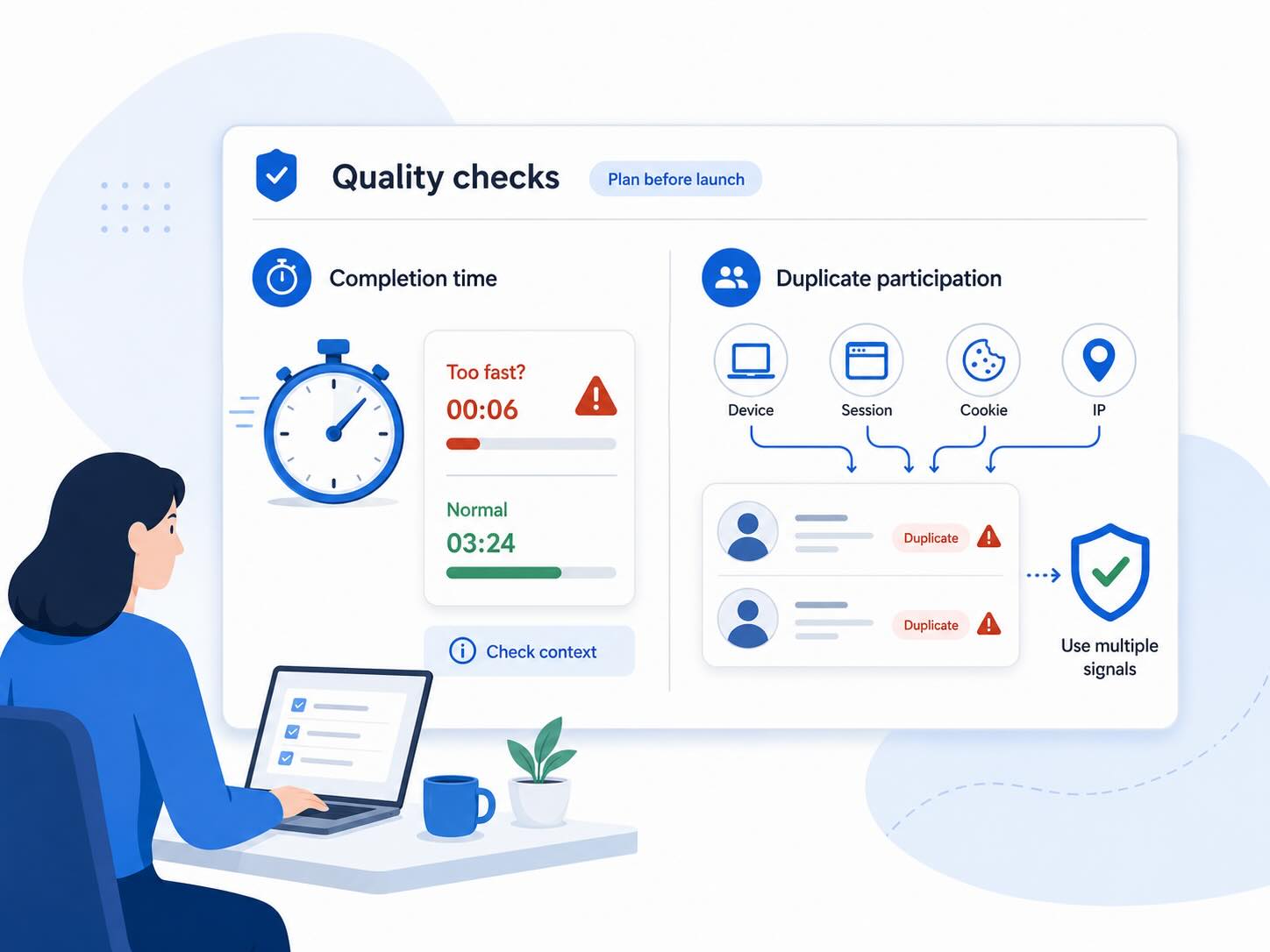
Build quality controls into the questionnaire and analysis plan, not after suspicious answers show up. Options include duplicate device or IP detection, minimum completion time, attention checks, consistency checks, open-ended review, and bot protection. Use judgment: a fast response isn’t automatically fake, and repeated answers can be legitimate. Good review weighs several signals at once.
How many survey responses do you need?
There’s no universal ideal. The right number depends on your goal, your audience size and diversity, the confidence you need, the margin of error you’ll accept, whether you’re comparing subgroups, and whether the research is qualitative or quantitative.
For early qualitative work, five to ten interviews may surface repeated themes — though those themes won’t necessarily represent the whole market. For a directional concept test, 30 to 50 well-qualified respondents can expose clear preferences and recurring concerns. PickFu suggests starting around 50 for many polls, and calls 50 to 75 a useful range for directional insight — though the right size always depends on the decision.
For broader quantitative research, 300 to 400 responses are often used to estimate patterns in a large population with a moderate margin of error. That’s a rule of thumb, not a law, and it doesn’t automatically support subgroup analysis.
If a study has 400 total respondents but compares four groups, the effective sample per group is much smaller. You need more responses when you want dependable results for several segments. And a big sample won’t fix a bad one: 500 random participants can’t answer a niche B2B question that 50 verified buyers could. For truly representative research, work with a methodologist or use a sample-size calculation.
What is a survey response rate?
A survey response rate is the share of eligible invited people who completed the survey. A simple version: completed eligible surveys ÷ eligible invitations × 100. If 1,000 eligible customers get an invite and 120 finish, the rate is 12%.
The real math gets messier when invitations bounce, eligibility is unknown, or people answer partially. AAPOR publishes standard definitions that separate response rates from related measures like cooperation and contact rates, which makes results easier to compare.
Don’t confuse a response rate with a completion rate. The response rate is how many invited people responded. The completion rate is how many people who started reached the end. A high completion rate can sit next to a low response rate: the few who begin find it easy, while most invitees ignore it.
There’s also no universal “good” rate. It varies by audience, relationship, survey mode, topic, incentive, and recruitment. So a benchmark without context can mislead.
How to improve survey response rates
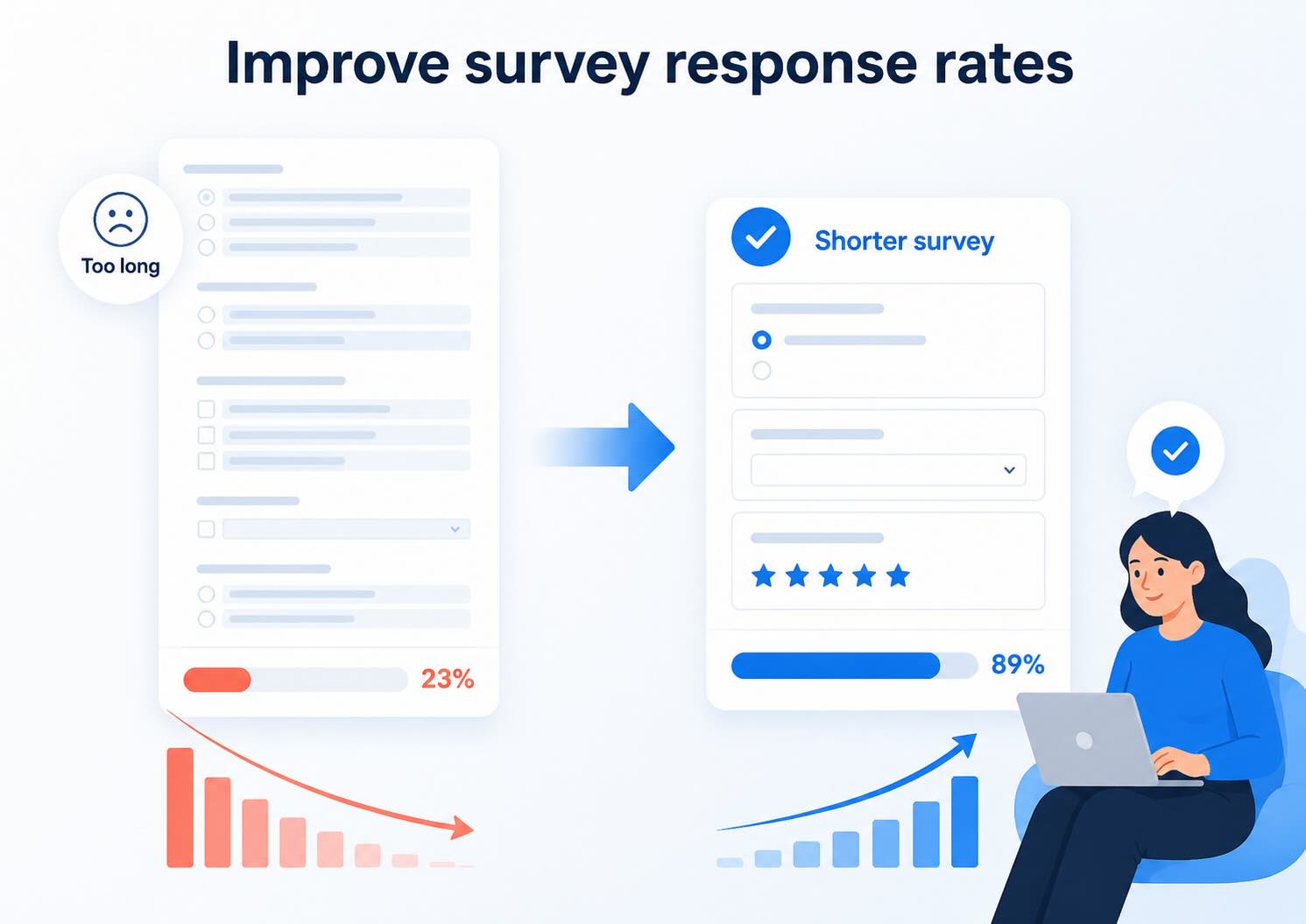
Better response rates come down to less friction and more relevance.
Keep the survey shorter than it needs to be. Length is a top cause of avoidable drop-off; Pew has found an inverse relationship between length and response rates. Cut the merely interesting questions and keep the ones that change a decision.
State the time honestly. “Two-minute survey” only builds trust if a typical person can finish in two minutes. Test it with a few people first.
Make the first question easy. The opener should confirm relevance and build momentum. A long demographic grid up front pushes people away.
Explain how you’ll use the feedback. “Help us improve the cancellation experience” beats “We value your feedback.”
Personalize the invitation. Mention the relevant product, event, or interaction — context, not discomfort.
Send one thoughtful reminder. Acknowledge the person may have missed the first message, and repeat the time commitment. Don’t guilt them.
Use progress indicators well. A progress bar helps in a longer survey, but it frustrates people when branching logic makes it jump around.
Avoid requiring every question. Required fields improve completeness, but they can also force someone to quit. Offer “not applicable” or “prefer not to say” where it fits.
Build trust before asking for sensitive information. Say why you need it and whether answers are anonymous. When you need an email for an incentive, collect it separately from the response.
Survey invitation templates
Adapt these to your relationship, audience, and purpose.
Email invitation
Subject: Help us improve [product or experience]
We’re gathering feedback from people who have used [product, service, or feature]. The survey takes about [X minutes], and your answers will help us understand what’s working and what needs improvement.
[Survey link]
Thanks for sharing your experience.
Customer feedback request
Thanks for using [product]. Could you answer a few questions about your recent experience? It takes less than [X minutes], and we’ll use the feedback to improve [specific part of the experience].
[Survey link]
Social media post
We’re researching [topic] and would love input from [target audience]. The survey takes about [X minutes] and covers [brief description].
[Survey link]
Community post
I’m running a short survey about [topic] for [research purpose]. I’m especially looking for responses from [qualification criteria]. It takes about [X minutes], and I’ll share a summary with the community when it’s done.
[Survey link]
Post-purchase request
Now that you’ve had time to use [product], we’d like to hear how it’s going. This short survey takes about [X minutes] and helps us improve future versions.
[Survey link]
Should you buy survey responses?
Buying survey responses through a reputable panel is a practical choice when you need qualified feedback fast. The phrase can sound shady — it sometimes means fake answers or bulk form fills — but that’s not real research.
A credible paid panel recruits real people, targets and screens them, pays them, checks quality, and is clear about its methods. Before you pay, look at where respondents come from, what targeting and screening you get, how fraud is caught, whether poor responses get replaced, how fast results arrive, and who owns the data.
PickFu is one example: it recruits verified human respondents, lets you target by audience, and returns a written explanation with every vote — so you see the reasoning, not just a tally.
Steer clear of sellers promising thousands of responses for almost nothing without saying where those people come from. Untargeted or automated answers pad the number of responses while making your survey results less reliable.
Common mistakes when trying to get survey responses
The most common mistake is blasting the survey as widely as possible without defining who should answer. Other frequent problems:
- Sharing it with an irrelevant audience
- Writing a questionnaire that’s too long
- Asking leading survey questions
- Hiding the expected completion time
- Offering incentives without quality controls
- Making the qualifying answer obvious
- Ignoring mobile
- Asking for sensitive demographics too early
- Sending no reminder — or too many
- Treating every response as equally credible
- Drawing population-level conclusions from a convenience sample
A founder thinking about how to sell app ideas might ask friends whether they like a concept. The encouragement feels good, but friends aren’t representative buyers and tend to avoid criticism. A stronger process uses mockup testing with qualified potential users, asks them to complete a realistic task, and compares stated interest against a waitlist or preorder. The survey becomes one piece of the evidence, not the whole strategy.
How to check survey response quality
Plan these checks before data collection begins.
Completion time. Extremely fast finishes can mean someone didn’t read the questions — but time alone isn’t enough to reject a response, since some people read quickly.
Duplicate participation. Use device, session, cookie, or IP controls where you can, but don’t lean on IP alone: households, schools, and offices share networks.
Inconsistent answers. Someone who says they never use a product and later describes weekly use may need a second look. Repeated inconsistencies can point to a confusing questionnaire, not fraud.
Straight-lining. Picking the same answer down a whole grid can mean inattention — or a genuine opinion. Combine it with time and consistency signals.
Open-ended review. Watch for gibberish, repeated text, off-topic answers, copied prompts, and identical responses across people. Don’t assume polished writing is fake; judge whether the answer has specific, relevant reasoning.
Attention checks. Use them sparingly. Too many make a survey feel adversarial.
Screening fit. Compare screening answers with later responses. Nobody should qualify just because they picked the obviously desirable option.
Best tools and channels to get survey responses
The right survey tools depend on whether you need questionnaire creation, respondent recruitment, ongoing feedback, or deeper analysis.
PickFu connects you with verified human respondents for fast feedback — but the range of what you can test is wide. Teams use it to compare images, logo, packaging, product images, ad AI creative, and landing pages; to test names, taglines, and copy; to run open-ended audience research and product-preference surveys; and to size up a new market before entering it — for example, how shoppers in Japan react to a product and its marketing versus shoppers in the US.
Every response comes with a written explanation, so you learn why, not just what. You can also send PickFu surveys to your existing audience: Own Audience polls support up to 500 responses at no charge, with optional email and demographic collection.
🤖 Run surveys inside your AI workflow. The PickFu MCP connects PickFu to AI assistants like Claude, ChatGPT, and Notion, so you can launch surveys and analyze results without leaving the tools you already use. Learn more and set up the MCP.
SurveyMonkey provides survey templates, question types, distribution tools, and analysis for customer feedback, employee research, events, and market studies. It’s useful when you need a flexible questionnaire and already have an audience — or want to buy targeted responses separately.
Qualtrics supports complex questionnaires, logic, multilingual research, customer experience programs, and sophisticated distribution. It fits organizations with formal research teams and enterprise reporting needs.
Google Forms is good for straightforward, low-cost data collection — simple surveys, internal feedback, and studies you distribute to an audience you already have. Recruiting respondents is still on you.
SurveySwap and SurveyCircle work for researchers willing to trade participation for responses. They suit student projects and modest samples, with less control than a tightly targeted paid panel.
Social and community platforms — Reddit, LinkedIn, Facebook, Slack, Discord, and niche forums — support organic recruitment when the audience is present, you have credibility, and the request is transparent.
Website and customer-feedback tools — widgets, in-app surveys, email platforms, and CRMs — are effective for existing users, and especially good for customer satisfaction, net promoter score, onboarding feedback, and customer experience monitoring.
Get survey responses: quick decision guide
| Goal | Best collection method | What to consider |
| Customer feedback | Email list, app, website, or post-purchase survey | Ask after a relevant interaction |
| Market research | Targeted research panel or paid recruitment | Use screening and quality controls |
| Academic research | Student networks, survey exchanges, communities, or panels | Follow institutional and consent rules |
| Product feedback | Beta users, customer interviews, panels, or in-app surveys | Recruit people who resemble intended users |
| Niche B2B research | LinkedIn, professional associations, or specialist panels | Expect higher recruiting cost |
| Free survey responses | Email, social media, communities, or survey exchanges | Audience relevance and speed may vary |
| Fast survey responses | Paid panel | Review targeting and response quality |
| Package testing | Targeted consumer panel | Recruit category buyers |
| Amazon split testing prep | Poll qualified Amazon shoppers before live testing | Validate creative first, then observe behavior |
| App concept validation | Prototype testing and targeted user research | Combine feedback with sign-up or usage behavior |
| GEO and SEO research | Customer polls, expert interviews, and original data | Answers how to create original content for GEO / SEO |
The goal is better evidence, not just more answers
A survey with hundreds of responses can still fail — when the wrong people answer, when the invitation attracts people who only want the incentive, when the questions nudge people toward the answer you want, or when stated intent gets passed off as proof of demand.
The strongest survey programs start with the decision. A founder testing a product idea needs potential users, not general encouragement. An Amazon seller judging product images needs category shoppers, not coworkers. A marketer running a brand name test needs first-impression feedback before explaining what the name is supposed to mean.
AI and automation can help you draft questions, form hypotheses, and process data. But synthetic respondents vs real consumer feedback still matters: simulated answers help you explore, while real people give you the evidence behind actual needs, reactions, and trade-offs. That’s the role of human-in-the-loop product research for AI. Technology makes research faster to run; human participants keep the decisions tied to the market you serve.
Getting survey responses isn’t about pushing a link into as many channels as possible. It’s about reaching the right people, at the right moment, with a question worth answering.
Ready to hear from the right people? Create your free PickFu account and run your first survey.
Frequently asked questions
How do I get responses for my survey?
Define the target audience, pick a channel where those people can be reached, and explain why their feedback matters. Email lists, research panels, online communities, website prompts, partner audiences, and paid ads can all work. Keep the questionnaire focused and use screening questions when fit matters.
How do I get respondents for a survey?
Recruit from your email list, customers, social media, professional communities, survey panels, research exchanges, paid ads, events, or partners. The best source depends on who needs to answer — don’t recruit a broad audience when the research needs specialized experience.
Where can I get people to answer my survey?
Options include PickFu, research panels, survey exchanges, Reddit, LinkedIn, customer email lists, professional associations, and your own website or app. Judge every source on targeting, quality controls, cost, and audience fit.
How do I get more survey answers?
Shorten the questionnaire, improve the invitation, state the time it takes, make it mobile-friendly, send a reminder, and offer an appropriate incentive. More answers won’t help if they come from the wrong audience, so recruitment quality stays first.
What is a survey response rate?
It’s the percentage of eligible invited participants who respond — completed eligible surveys divided by eligible invitations, times 100. Formal research may use more detailed AAPOR definitions.
How do I find survey respondents?
Start with people who already have a relevant relationship to the research — customers, trial users, event attendees, or subscribers. Without an owned audience, use a targeted panel, a professional community, a social platform, a partner, or a survey exchange.
How do you get a high survey response rate?
Send the survey to a relevant audience, keep it short, explain why it matters, show the time it takes, optimize for mobile, and send a respectful reminder. Trust, timing, and relevance matter more than resending the link.
What is the best sample size for an online survey?
There’s no universal best. A small qualitative study may reveal early themes with five to ten interviews. Thirty to 50 qualified respondents can support directional feedback. Larger quantitative studies often use hundreds, especially for subgroup analysis. Recruitment method and audience fit matter as much as the raw number.
How can I incentivize people to complete my survey?
Offer a gift card, cash, discount, product credit, useful resource, charitable donation, early access, or a raffle entry. Match the reward to the survey length and the respondent’s expertise, and use screening and quality checks so it doesn’t attract people who misrepresent themselves.
What are effective strategies for increasing survey participation?
Use a specific invitation, explain the purpose, keep it short, state the time, personalize the message, optimize for mobile, and send one or two reminders. Recruiting at a relevant moment in the customer journey helps too.
What strategies can I use to increase the number of responses to my online survey?
Combine a few channels instead of relying on a single social post. For example, email your list, add the survey to a customer touchpoint, ask a partner to share it, and use a targeted panel to fill audience gaps.
What are effective methods for recruiting participants for an online survey?
Customer-email outreach, paid research panels, LinkedIn and Reddit communities, website prompts, paid ads, professional associations, survey exchanges, event QR codes, and partner newsletters. Choose based on the audience, deadline, risk, and budget.
How can I get survey responses fast?
Use an existing customer audience or a paid survey panel. Fast recruitment still needs qualification criteria and quality checks — a quick sample of the wrong people just gives you a confident answer to the wrong question.
How can I get survey responses for free?
Share it with an existing email list, social followers, customer communities, professional groups, student networks, or relevant subreddits. Survey exchanges can also trade your participation for responses to yours.
Is it okay to buy survey responses?
Yes, when they come from a reputable panel that recruits real people, discloses its methods, supports targeting, and applies quality controls. Avoid services selling anonymous bulk submissions or automated answers.
Why am I not getting survey responses?
Common reasons: an irrelevant audience, a weak invitation, excessive length, no clear benefit, poor mobile usability, an unappealing incentive, low trust, or bad timing. Look at the experience from the participant’s side rather than assuming people just won’t help.
How do I know whether my survey responses are reliable?
Check whether participants match the target audience, then review completion times, duplicate activity, inconsistent answers, straight-lining, failed attention checks, and open-ended quality. Reliability also depends on question wording, sampling, and whether you’re asking the survey to support a claim it can genuinely back.